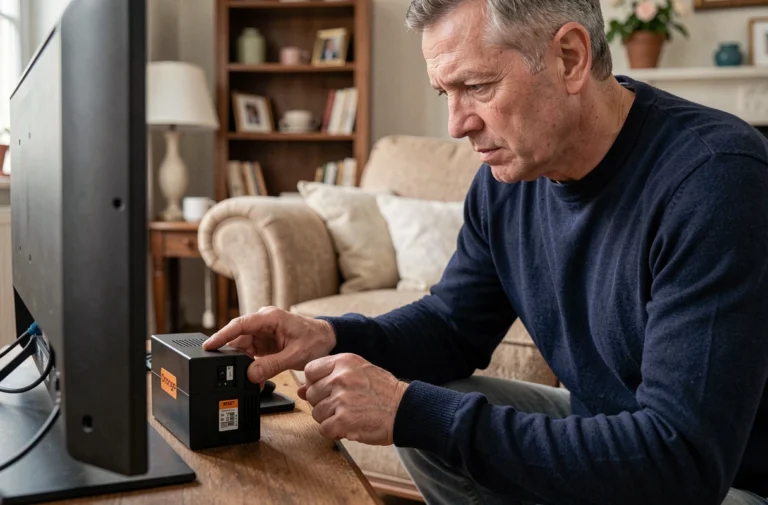
Decree No. 2026-254 of April 8, 2026, modifies the way in which sentence reductions are calculated for individuals placed under electronic surveillance. The electronic bracelet, officially named home detention under electronic surveillance (DDSE), remains the most frequently granted measure in France.
The rules governing its allocation and its effects on the actual duration of detention have changed in several respects, with direct consequences for the convicted individuals, their families, and criminal law professionals.
Human Resources of SPIP and Risk of Revocation of the Electronic Bracelet
Most articles on the subject detail the eligibility conditions or the authorized exit times. Few address the link that determines, in practice, whether a placement under an electronic bracelet will last until its term: the monitoring provided by the prison integration and probation service (SPIP).
The SPIP is the main contact for the convicted individual throughout the duration of the measure. It is responsible for transmitting reports on compliance with obligations to the judge of the application of sentences (JAP). Insufficient monitoring, due to a lack of available counselors, can lead to incomplete or late reports, which weakens the position of the convicted individual during reevaluations.
The Belgian agreement of March 2026 on the generalization of the bracelet for sentences of up to 18 months highlighted this problem. The majority parties emphasized that without additional human resources, the increase in placements could lead to more revocations.
The situation in France is not identical, but the logic remains comparable. A well-documented file by the SPIP, including proof of employment, care, or training, often makes the difference between maintaining the measure and withdrawing it.
To follow the evolution of the applicable regulatory framework, the electronic bracelet 2026 on Buzzarium details the new practices and their impact on the calculation of sentence reductions.

Decree of April 8, 2026: What Changes in the Calculation of Sentence Reductions
Prior to this decree, a portion of sentence reductions was granted almost automatically, subject to good behavior. The new text introduces a personalized evaluation of each case by the prison administration. Sentence reduction credits are now calculated based on specific execution criteria, rather than a simple calendar scale.
The JAP retains its decision-making power, but it relies on a report from the SPIP that incorporates new elements:
- The actual compliance with presence times at home and authorized exit slots, verified by the receiver box installed in the residence
- Active participation in a reintegration project (employment, training, medical follow-up), documented by supporting documents submitted to the file
- The absence of reported technical or behavioral incidents during the monitoring period
An incident, even minor (late return home, missed appointment), can now change the expected end date of the sentence. Each infraction is subject to a written report that is included in the overall calculation. The JAP’s discretion still exists, but it is exercised on a more detailed file than before.
Role of the Lawyer in Preparing the Sentence Adjustment File
The strengthening of personalized evaluation gives greater weight to the quality of the file presented before the JAP or the sentencing application commission. The convicted individual who prepares their adjustment request with a lawyer specialized in criminal law has a concrete advantage: anticipating the criteria examined.
A lawyer intervenes at several levels. They verify that the supporting documents (employment contract, proof of residence, medical certificates) meet the requirements of the decree. They prepare the convicted individual for the JAP’s questions about their exit project. They can also contest a report from the SPIP deemed incomplete or inaccurate, by requesting additional information before the hearing.
The calculation of the end date of the sentence under the bracelet directly depends on the strength of the file. A family questioning the expected date communicated by the SPIP often has an interest in having this calculation verified by a professional. The gap between the announced date and the actual date can vary depending on whether the reductions have been fully granted or partially withdrawn.
Incidents Under the Bracelet: What the JAP Examines
The withdrawal of days of sentence reduction is not automatic after an incident. The JAP takes into account the nature of the infraction, its severity, and its repetition. An isolated delay of a few minutes does not have the same effect as a prolonged absence from home without authorization.
Field reports diverge on this point: some JAPs apply a tolerance for technical incidents (failure of the box, power outage), while others require written justification in all cases. Practice varies from one jurisdiction to another, making it difficult to predict uniform outcomes across the territory.

Limitations of the System and Open Questions on Electronic Surveillance
The electronic bracelet does not solve the issue of prison overcrowding on its own. The Moroccan example illustrates the possible gap between a legal framework and its implementation: the Moroccan Ministry of Justice indicated that only 18 electronic bracelets had actually been installed since the system came into effect in that country. The reasons cited are the lack of available equipment and the reluctance of some judges.
In France, the stock of bracelets is more developed, but the ramp-up related to the 2026 decree raises logistical questions. The number of SPIP counselors, the capacity of monitoring centers, and the availability of hearing slots before the JAP condition the actual pace of placements.
The predictability of decisions remains a point of tension. Two convicted individuals with similar profiles may receive different sentence reductions depending on the jurisdiction, the SPIP report, or the workload of the JAP. The increased individualization of the calculation makes each file unique, complicating the task for families and lawyers seeking to anticipate an end date for the measure.
The decree of April 8, 2026, marks a turning point in how the execution of sentences under the bracelet is evaluated. The quality of monitoring by the SPIP and the rigor of the file presented to the JAP weigh more heavily than before in the final calculation. For the convicted individuals and their families, this means that meticulous preparation of the adjustment file is no longer optional.