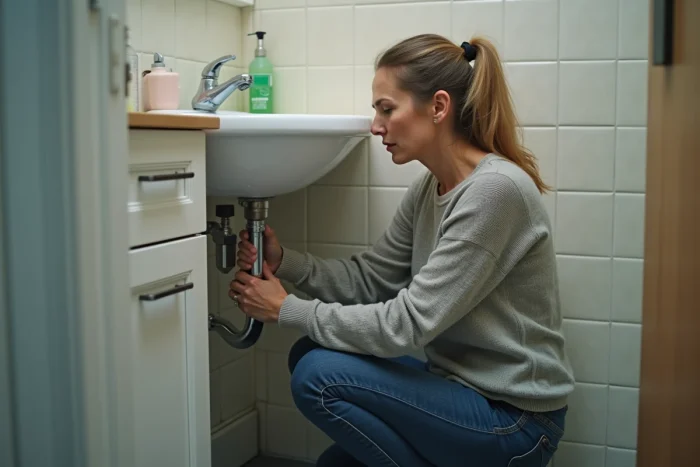
A leaking sink trap doesn’t make noise, but it can trigger a real battle of responsibilities between tenant and landlord. No domestic scene here, but a genuine legal puzzle, often underestimated, that plays out in the shadows of pipes and legal texts.
Between natural wear, lack of maintenance, or simple obsolescence, the line blurs and everyone stands their ground. The texts seem clear, but the reality on the ground holds many surprises. Add to that a few court decisions, and the slightest water leak can quickly turn into an administrative tug-of-war.
Tenant or landlord: what the law says about plumbing repairs
When a plumbing issue arises, the question of responsibility soon enters the exchanges between tenant and landlord. The famous decree of August 26, 1987 remains the reference: it clearly details the list of rental repairs that fall to the occupant of the housing. Among these tasks are cleaning the traps, replacing seals, and unblocking pipes. In short, everything that falls under regular maintenance.
But the distinction between what falls under maintenance and what is due to obsolescence is not obvious. As soon as a sink trap gives way due to time, the landlord must take responsibility for its replacement. Conversely, if the problem arises from a lack of maintenance, it is the tenant who must foot the bill. This principle applies to all equipment: sink, basin, toilet… Rental repair stops where obsolescence or a design flaw begins.
The question keeps coming back: who should replace the sink trap? The article from ImmoVite explains it in detail, but it’s good to recall the basics. Here’s how the roles are divided:
- The tenant handles the cleaning and changing of seals, collars, or flaps.
- The landlord must intervene to replace the trap in case of obsolescence or structural defect.
Case law sometimes clarifies these rules, especially when the line between misuse and simple aging is not clear. Ultimately, it all rests on maintenance records and compliance with housing standards. Rigorous tracking protects everyone from unpleasant surprises and avoids endless disputes.
Who should replace the sink trap in case of a leak or breakage?
When a sink trap starts to leak or breaks, responsibility primarily depends on the cause of the problem. For the tenant, the obligation is clear: ensure regular maintenance, clean the trap, replace seals, and ensure the general good condition of the equipment. If the failure is caused by negligence, it is up to the occupant to intervene or pay for the intervention.
However, if the leak results from normal wear or proven obsolescence, the burden falls on the landlord. It is then up to the landlord to finance the replacement of the trap, as the equipment has simply reached the end of its life. This responsibility is not determined lightly: it relies on the condition of the trap and the ability to demonstrate that maintenance was indeed performed by the tenant.
In practice, several scenarios arise: a damaged seal, a trap clogged with debris, or a crack due to the age of the material. Cleaning and replacing small components remain the tenant’s responsibility. If the part itself is at fault due to wear, the landlord must take over.
- The tenant must ensure the cleaning and regular maintenance of the trap.
- The landlord must replace the trap in case of obsolescence or original non-compliance.
Sometimes a professional plumber is called in to decide. A technical report, invoice, or detailed quote will help determine whether the cause of the problem stems from a lack of maintenance or aging material. This can clarify the distribution of costs… and ease tensions.

Practical tips to avoid disputes and assert your rights
Before any intervention on the sink trap, it is better to establish a complete inventory, with supporting photos. This document, signed jointly, will serve as proof if a disagreement arises about the nature of the leak or the reason for the repair. As soon as a problem appears, inform the other party in writing, with dated messages or emails, to keep a record. A formal exchange, via registered letter with acknowledgment of receipt, can be useful if the dialogue becomes strained.
If there is doubt about responsibility, it is wise to seek the opinion of an independent plumber. A quote or report will clarify whether the failure is due to a lack of maintenance or normal wear. This document will be valuable for distributing costs or for involving home insurance or the condominium if the leak has affected other units.
If an agreement is no longer possible, the departmental conciliation commission can be seized. This free body offers quick mediation between tenant and landlord, thus avoiding judicial entanglement. Gather all useful documents: lease, inventories, invoices, email exchanges, and technical diagnostics. The stronger your case, the more you avoid getting bogged down in endless conflicts.
A trap doesn’t make noise. But if mismanaged, it can awaken storms where only a trickle of water was expected. It’s better to anticipate, document, and communicate, rather than let the slightest leak turn into a relational shipwreck.