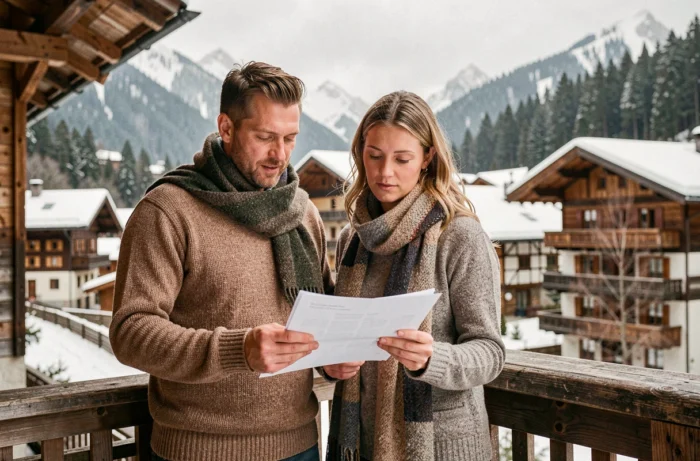
The mountain real estate market in Switzerland follows rules that have nothing to do with those of the rest of the Alpine arc. Even before comparing prices per square meter or assessing rental yields, a buyer must navigate a legal framework that filters access to property based on nationality, place of residence, and the targeted municipality. Understanding these mechanisms is crucial for the success of any real estate project in Swiss mountain areas.
Lex Koller and municipal restrictions: the legal filter before the real estate project
Switzerland subjects the acquisition of properties by foreign non-residents to the Lex Koller, a federal law that requires prior cantonal authorization. This authorization depends on the buyer’s nationality, residence, the relevant canton, and the intended use of the property. It does not confer any right of residence in Switzerland.
The most significant constraint concerns geographical choice. A buyer residing abroad can generally only acquire a vacation home in a tourist municipality designated by the canton. This is not a mere formality: some Alpine municipalities are not on the list, which immediately excludes attractive resorts.
For Swiss residents or holders of a C permit, these restrictions do not apply in the same way. The distinction between primary residence and secondary residence remains crucial, especially since the Weber initiative caps the share of secondary residences in certain municipalities.
The listings available on alpine-immobilier.ch allow targeting properties in municipalities where acquisition is still permitted. Verifying the regulatory status of the property with the cantonal land registry remains a prerequisite for any offer.
Weber initiative and secondary residences in Swiss resorts: a market under pressure
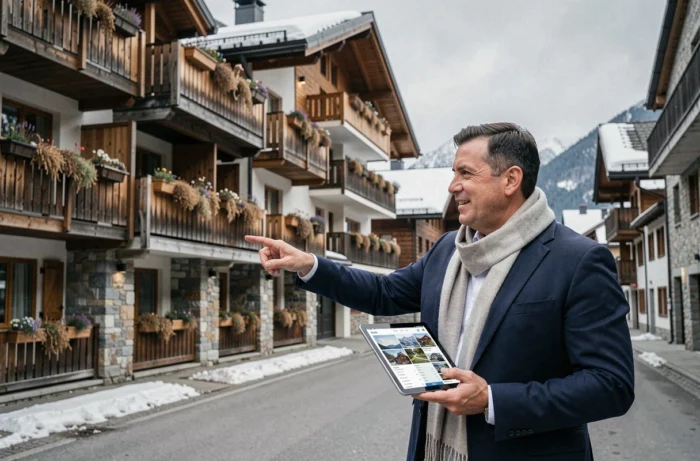
Adopted in 2012, the initiative on secondary residences (known as the Weber initiative) prohibits the construction of new secondary residences in municipalities where their proportion exceeds the legal threshold. In most Swiss Alpine resorts, this threshold has already been reached or exceeded.
The direct consequence is a freeze on new secondary residence offerings in these municipalities. The existing stock becomes the only supply source for buyers interested in a seasonal getaway. This structural scarcity supports prices, even during periods of global economic slowdown.
To circumvent this limitation, some developers are creating hotel residences or projects classified as primary residences with a requirement for residency. These arrangements involve usage constraints (minimum stay duration, prohibition of free rental) that profoundly alter the profitability calculation. An investor purchasing in this framework does not have the same flexibility as a traditional owner.
Renting in Swiss mountains: rental yield and regulatory constraints
Seasonal rentals in Swiss resorts attract high prices during peak season. However, several factors reduce the net yield compared to theoretical estimates:
- Condominium fees in the mountains often include snow removal, maintenance of underground parking, and technical management of buildings exposed to winter conditions, which represents a significantly heavier burden than in the plains.
- Cantonal regulations may impose limits on the duration of tourist rentals or require specific registration, particularly in the cantons of Valais and Bern.
- Effective occupancy rarely exceeds a few months per year unless the property is located in a resort offering a strong summer appeal (hiking, mountain biking, thermal baths).
A property in a four-season resort generates a significantly higher occupancy rate than a property located in a solely winter resort. This criterion weighs more heavily on actual profitability than the purchase price per square meter.
Climate change and altitude: a parameter redefining the value of resorts
Natural snowfall is declining in resorts located below 1,500 meters in altitude. The available data do not allow for precise predictions of the pace of this decline, but the trend is pushing buyers and investors toward higher-altitude resorts.
This shift in demand creates two distinct markets. High-altitude resorts, equipped with glaciers or ski areas above 2,000 meters, are seeing their real estate attractiveness strengthen. In contrast, mid-mountain resorts must diversify their offerings to maintain annual attendance.
A buyer thinking long-term must incorporate this parameter into their choice. The heritage value of an apartment in a resort depends as much on altitude and the resort’s ability to reinvent itself as on the living space or interior finishes.
Buying or renting in Switzerland: the decision criteria that really matter
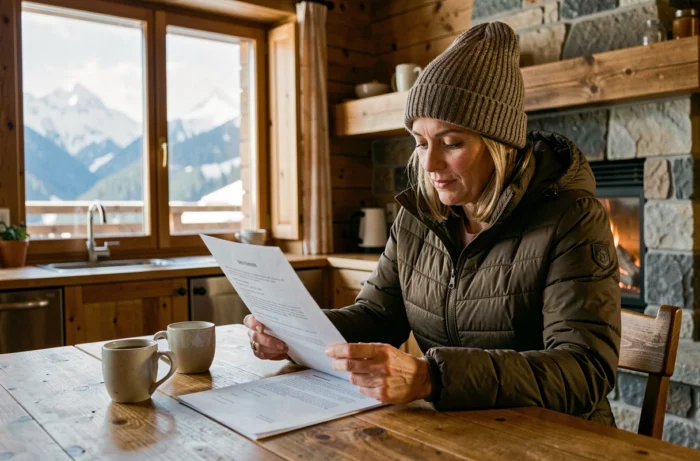
The choice between buying and renting in the Swiss mountains is not just a calculation of monthly payments. Several criteria specific to the Swiss context weigh on the decision:
- The buyer’s residency status determines legal access to property. A foreign non-resident subject to the Lex Koller has a limited choice of municipalities and longer administrative procedures.
- Cantonal taxation varies significantly from one canton to another, both in terms of property tax and the taxation of the property’s rental value (a Swiss mechanism that taxes the owner on the theoretical rent of their own home, even if they occupy it).
- The flexibility of use is significant: a tenant can change resorts each season, test different regions, adjust their budget. An owner is tied to a municipality, fixed costs, and a resale market that can be illiquid.
For occasional use of a few weeks per year, renting often remains more financially rational, unless the heritage objective outweighs the yield. Buying is more justified when it is accompanied by a life project or a realistic rental strategy that incorporates local regulatory constraints.
The mountain real estate market in Switzerland rewards buyers who understand the legal framework before looking at listings. The municipality, the canton, and residency status determine what is possible long before the budget comes into play.