A Honda PCX showing 85,000 km on the odometer with its original engine, an XMAX sold at 60,000 km without having opened the lower engine: these cases exist, documented on specialized forums. But alongside, entry-level 125 scooters fail their transmission before 25,000 km. The question of the mileage limit for a 125 scooter does not have a single answer, and that is precisely what makes the topic tricky both for buying and using.
Engine RPM on highways: the wear factor that technical sheets do not show
We often talk about maintenance and build quality. Less about engine RPM in real conditions. A 125 scooter used primarily in the city operates at a moderate RPM, with short acceleration phases. The same scooter launched daily on the highway at full throttle, speedometer pinned towards maximum speed, stresses its engine in a radically different way.
Feedback from high-mileage riders confirms that a 125 used regularly at full throttle on highways sees its mechanical lifespan significantly reduced compared to mixed or urban use. The reason is mechanical: a 125 single-cylinder engine that runs continuously close to its maximum RPM endures disproportionate thermal and mechanical stresses compared to a larger displacement engine that has a power margin.
Specifically, for those who do suburban or national roads at moderate speeds, the mechanics handle the kilometers much better. To better understand the maximum mileage of a 125 scooter, one must first look at the type of road traveled before the raw number on the odometer.

Premium or entry-level 125 scooter: the longevity gap is real
Feedback from workshops and multi-brand dealerships draws a clear line between two categories of 125 scooters. On one side, high-end models from Honda (PCX, SH), Yamaha (XMAX), or Piaggio. On the other, entry-level 125s or less established brands.
The former regularly reach 70,000 to 100,000 km with original engine and lower engine, provided they are well maintained. The latter tend to experience more engine failures or transmission issues well before reaching 40,000 km. This is not a matter of mechanical snobbery; it’s a reality of machining tolerance, material quality, and design.
What makes the difference in the workshop
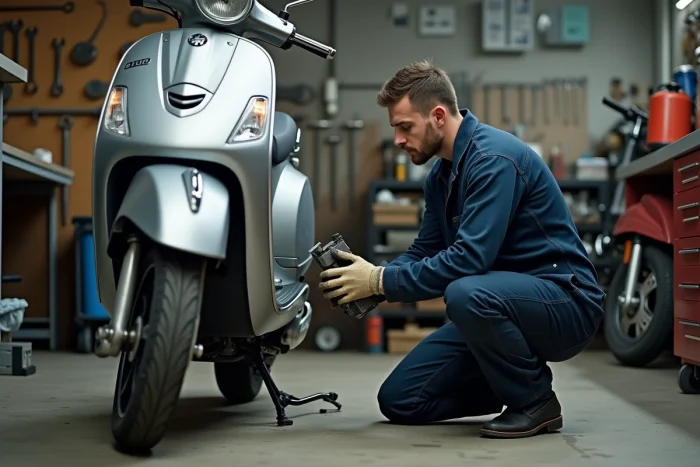
On a Honda PCX post-2018, workshop managers intervene around 40,000 to 60,000 km for major services (belt, rollers, possibly clutch). The engine, however, holds up. On an entry-level 125, these same interventions sometimes occur as early as 15,000 or 20,000 km, and the reliability of the engine block remains uncertain beyond that.
The choice of model weighs as much, if not more, than the displayed mileage. A well-maintained XMAX at 50,000 km is a better bet than a generic scooter at 18,000 km with an unknown history.
Maintenance of a high-mileage 125 scooter: key areas not to neglect
The longevity of a 125 scooter can be summarized in one sentence: a well-lubricated engine and a monitored transmission last a long time. Frequent oil changes (more often than the manufacturer’s minimum recommendation) are the first lever. In daily urban use with frequent stops, the oil degrades faster than on a smooth journey.
Critical areas to monitor on a high-mileage 125 scooter:
- The transmission belt and rollers: their wear is gradual, but a belt that breaks can damage the variator. Preventive replacement is recommended according to manufacturer guidelines, often well before failure.
- The coolant on liquid-cooled models: an overheating engine ages faster, especially in slow urban use.
- The brake pads and discs: safety also depends on this, and an urban scooter brakes much more than a touring scooter.
- The air filter: if clogged, it weakens the mixture and makes the engine run hotter, which accelerates wear.
Feedback varies on the ideal frequency of these interventions depending on the brands, but the consensus on the ground is clear: it’s better to have slightly early maintenance than a replacement after failure.
Buying a used 125 scooter: reading the mileage differently
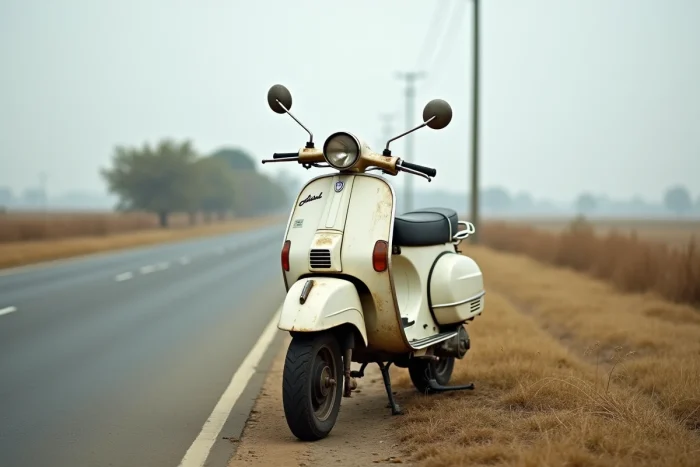
The odometer of a used 125 scooter tells only part of the story. Two identical scooters with the same mileage can be in opposite mechanical conditions. One has been ridden in the city at a moderate pace with regular oil changes. The other has been on highways at full throttle with minimal maintenance.
Concrete signals to check
Rather than setting an arbitrary mileage threshold, it’s better to observe physical indicators. The condition of the belt and rollers gives an idea of the care taken with the transmission. The color of the engine oil (black and thick or golden and fluid) indicates the rigor of the oil changes. The condition of the silent blocks and engine mounts reveals intensive use.
A complete maintenance log with invoices is worth more than low mileage without a history. Used professionals know this: a 125 scooter showing 35,000 km with no maintenance records is riskier than a model with 55,000 km that has documented service at a dealership.
The lifespan of a 125 scooter depends less on a magic number than on a combination of concrete factors: brand, type of use, maintenance rigor, quality of parts used. Well-maintained premium models far exceed expectations, while entry-level models require increased vigilance from the first tens of thousands of kilometers. The odometer alone is never enough to decide.