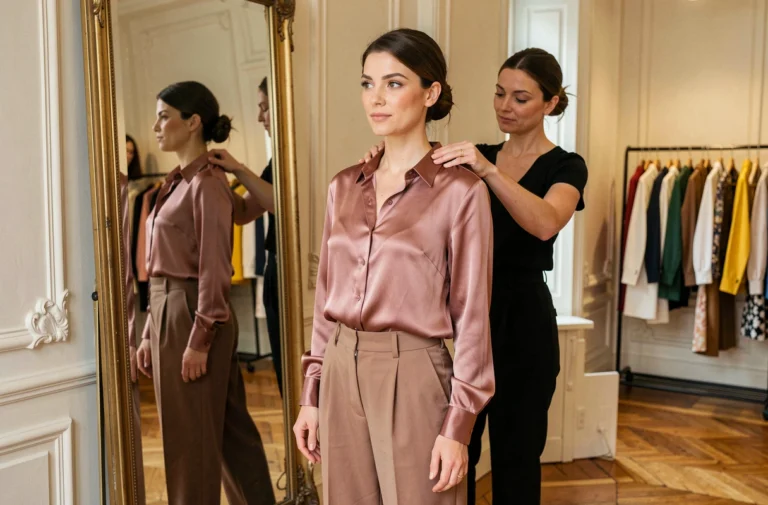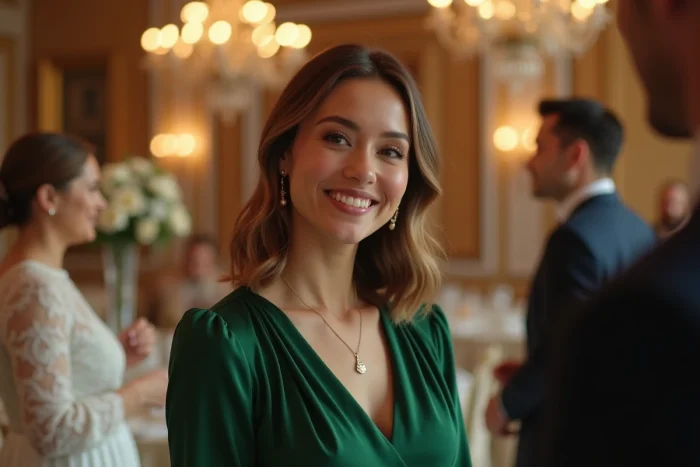
Green has long been relegated to the category of colors to avoid during wedding celebrations. However, some local traditions associate it with fertility or luck, while others see it as a symbol of misfortune. This persistent ambiguity creates hesitations among guests as well as brides. Contemporary designers are now rehabilitating the green dress, breaking away from classic codes. Between popular beliefs, fluctuating conventions, and new trends, clothing choices are evolving, challenging certainties.
Green Dress at a Wedding: Between Cultural Heritage, Beliefs, and Evolving Codes
Wearing a green dress at a wedding in France takes on the appearance of a statement. The history of this color is shaped by the caution inherited from theater and the desire to dare differently on grand days. In some regions, green is rare, banned without appeal; elsewhere, it asserts itself, worn by guests who are not afraid to change the game, in Paris as well as Bordeaux, sometimes even on the side of the civil bride.
Behind this hue lies a whole history of beliefs and divisions. Codes change, but distrust never completely disappears. Long associated with nature, hope, or recklessness, the green dress raises questions: is it a misstep or a true fashion statement? While white remains out of reach, reserved for the bride, some designers brilliantly break the rules, betting on refined fabrics, understated cuts, and modern accessories to enhance green without making a fuss. We better understand the hesitations when we look into the meaning of the green dress at a wedding. This choice reflects a subtle compromise: respecting tradition, asserting one’s personality, stepping off the beaten path. Daring to wear green often means questioning old customs without ever forgetting them.
Should We Fear Superstition? What Traditions and Etiquette Really Say
No one escapes the old reflex of judging the dress code of weddings. Green, haunted by legends and superstitions, retains a sultry image for some. However, there is no engraved prohibition against wearing a green dress at a union. The only intangible rule: never encroach on the bride’s white or its shades.
French dress etiquette also advises avoiding a few other colors: black perceived as too dark, red deemed too bold, and bright tones often discouraged to avoid faux pas. Preferring harmony is the rule of the game. When well-balanced, a green dress—pastel, emerald, sage—affirms uniqueness without risking bad taste.
Staying in one’s place also means avoiding any unintentional rivalry. There’s no question of imitating the bride in cut or accessories. Here, simplicity pays off, as does precision. One always adapts their choice to the celebration: venue, aura, moment, atmosphere. To clarify the choice of a green dress at a wedding, adopt these concrete guidelines:
- Choose deep or pastel greens, a true elegance asset regardless of the context.
- Keep bright shades for accessories, which enhance without dominating the outfit.
- Respect the theme and check if there is a dress code defined by the hosts.
Practical Tips for Choosing and Wearing the Ideal Green Dress According to the Type of Ceremony
Considering a green dress as a guest means combining personal style with respect for the circumstances. It all starts with the type of event. For a civil wedding at the town hall, favor airy materials: chiffon, crepe, lightweight silk. Midi, wrap, or straight cuts appeal with their effective sobriety.
Green ranges from sage to celadon, through emerald or mint. Each of these shades can suit the mood and season. Betting on accessories is often the key to a successful ensemble. Before making your choice, consider the following elements:
- Gold or silver jewelry: they energize green and give it a sophisticated aura without forcing the gesture.
- Elegant heels or fine jewelry: measured touches for a silhouette that never steals the spotlight.
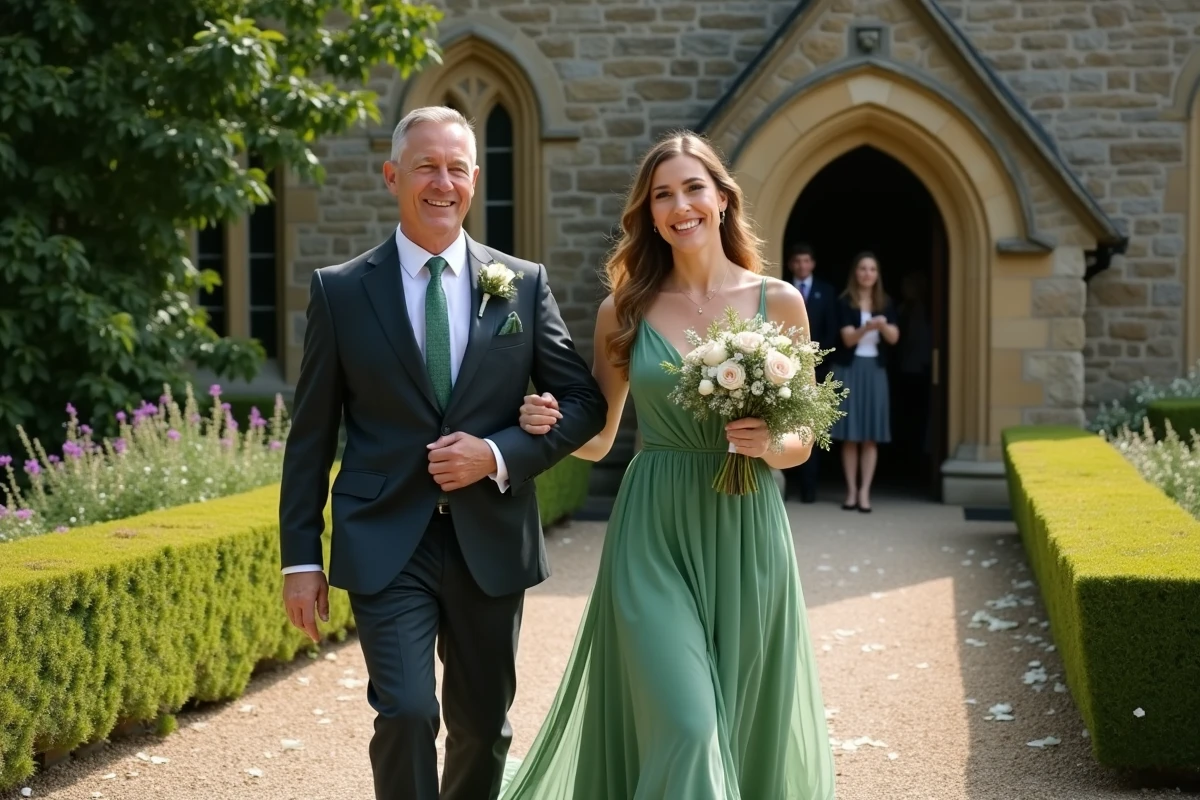
For a garden party or summer ceremony, a long flowing dress effortlessly embraces the countryside vibe. Thin sandals, a small bag, and discretion on embellishments are enough to catch the light without ever imposing on the bride. The idea: stay measured, play on the balance of volumes and material effects.
Also, think about matching the color to the season or the light of the moment: a deep green flatters fair skin in the evening while a celadon or anise reveals a tan under the sun. Upon reflection, choosing green is betting on an elegance that embraces itself, an invitation to step out of the shadows of conventions… with subtlety.