A simple square of fabric can transform an ordinary hairstyle into a striking style detail. A scarf works with every length, texture, and occasion. Here are twenty practical scarf hairstyles, grouped by tying technique, to help you switch up your look without spending hours in front of the mirror.
1. The scarf-wrapped ponytail
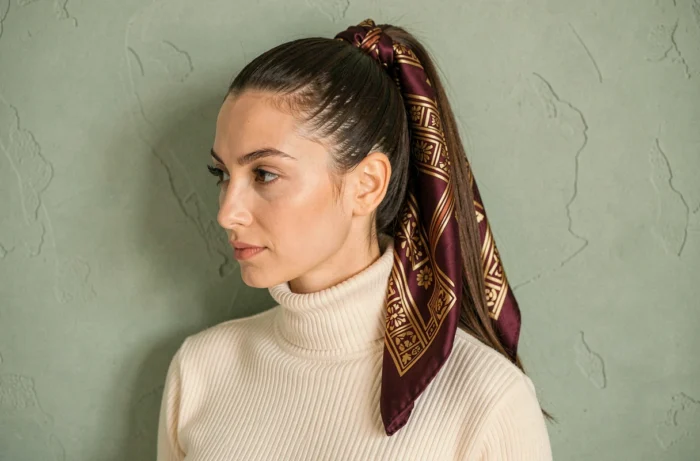
Tie your hair into a low or mid-height ponytail. Fold a scarf into a narrow strip, then wrap it in a spiral around the hair tie and down the length of the ponytail. Tie the ends at the tip or let them hang loose.
This technique hides a worn-out hair tie and adds a pop of color with minimal effort. It works on straight and wavy hair alike. Avoid pulling too tightly at the base: a tight hairstyle can weaken the hairline and may contribute to traction alopecia.
2. The top-knotted headband
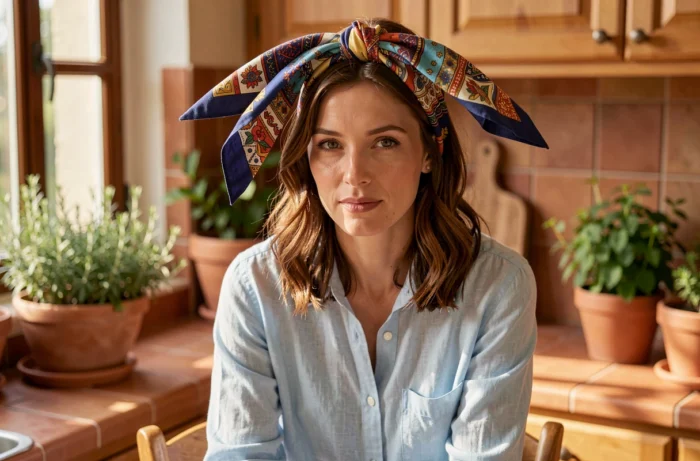
Fold the scarf into a triangle, then into a headband about four centimeters wide. Place it behind your neck and bring both ends over the top of your head. Tie a simple knot or a small flat knot.
If you’re looking to explore scarf hairstyles that work just as well on short hair as on long hair, this style is a great place to start. The visible knot on top adds a much-loved retro touch.
3. The side-swept boho twist
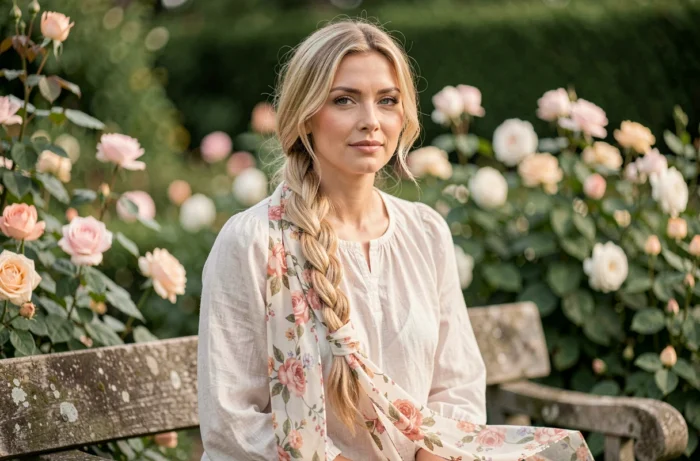
Gather your hair into a low ponytail swept to one side. Place the scarf over your head like a headband, tie its ends around the hair tie, then twist the scarf and hair together. Tie the ends to secure the twist.
Gently tug on a few strands to add volume and soften the look. This hairstyle works especially well with a lightweight cotton scarf on medium-length hair.
4. The wrapped low bun
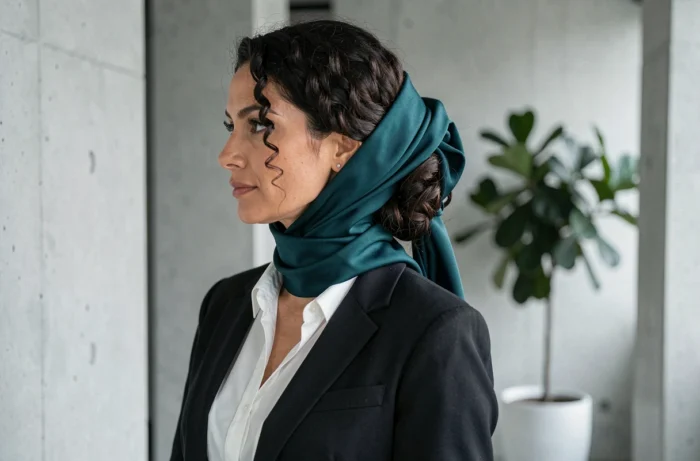
Create a classic low bun and secure it with pins. Fold your scarf into a wide strip, wrap it around the bun until it is completely covered, then tuck the ends under the base.
The result looks like a miniature turban. This style protects your ends from friction, especially if you choose a satin-weave fabric. Keep in mind that satin refers to a type of weave, not a fiber: check the label to find out what the fabric is actually made of.
5. The slim scarf headband
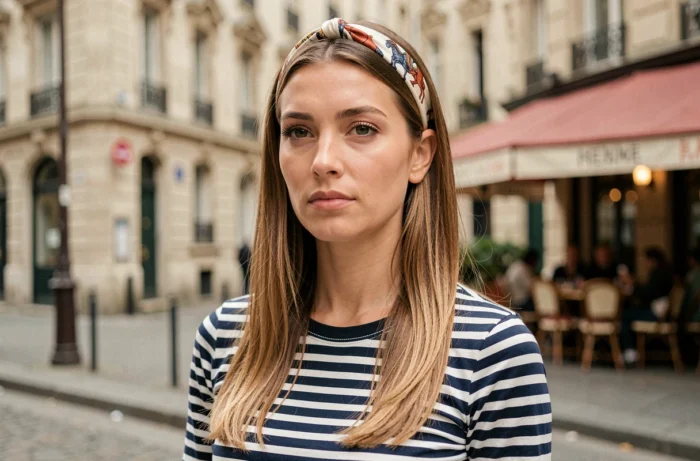
Fold the scarf until it forms a one-centimeter-wide strip. Place it like a headband from ear to ear, then discreetly tie it under your hair at the nape of your neck.
This minimalist style is suitable for the office or a dinner out. The scarf replaces a rigid headband that can pull at your temples. Choose a subtle print or a solid color that contrasts with your hair.
6. The three-strand braid with an integrated scarf
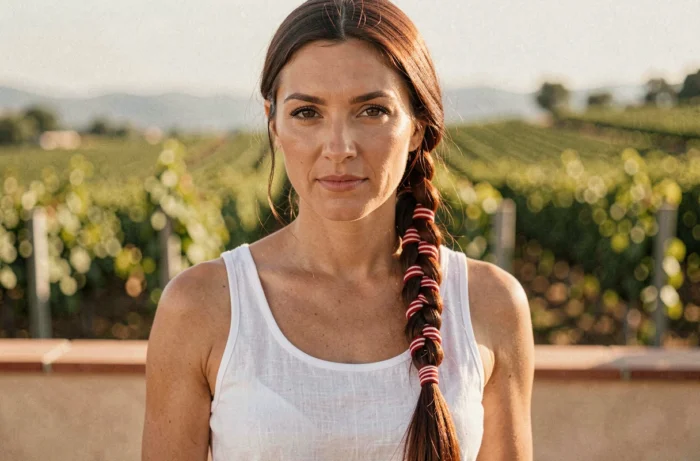
Divide your hair into two sections. Add the scarf, folded into a strip, as the third strand at the start of the braid. Braid as usual: the fabric’s pattern will appear at regular intervals throughout the plait.
Ever noticed how a simple braid can sometimes look a little flat? A scarf adds color and visual thickness without styling products. On fine hair, the volumizing effect is immediate.
7. The full turban
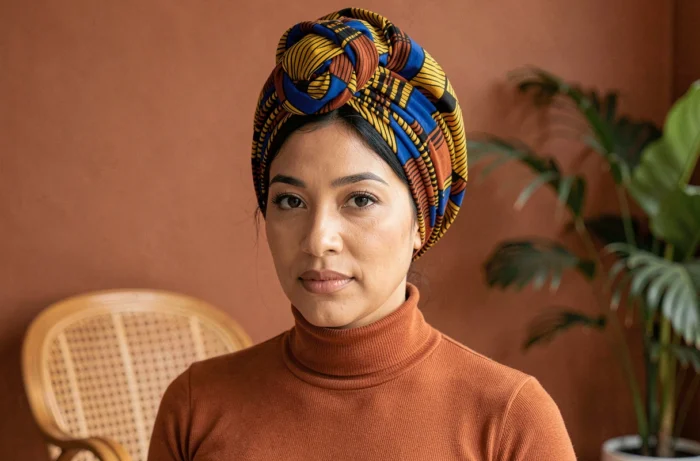
Use a square scarf at least 90 centimeters across. Fold it into a triangle, place the base across your forehead, cross the two ends behind your head, bring them back to the front, and tie them. Tuck the ends under the fabric.
The turban completely covers your hair, making it a great option for a bad hair day. Keep in mind that a decorative scarf does not protect you from UV rays: if your scalp is visible along your part or at your temples, you still need appropriate sun protection.
8. The tie-style knot on a high ponytail
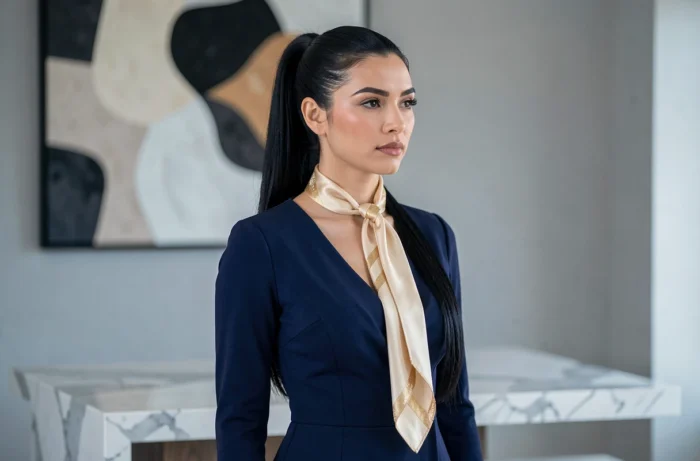
Tie your hair into a high ponytail. Tie the scarf around the hair tie with a simple knot, then let both ends hang down the ponytail like a necktie.
This style works especially well with a silk scarf that slips and floats as you move. It creates the illusion of extra length and adds a sophisticated touch to a casual look.
9. The half-up style with a bow
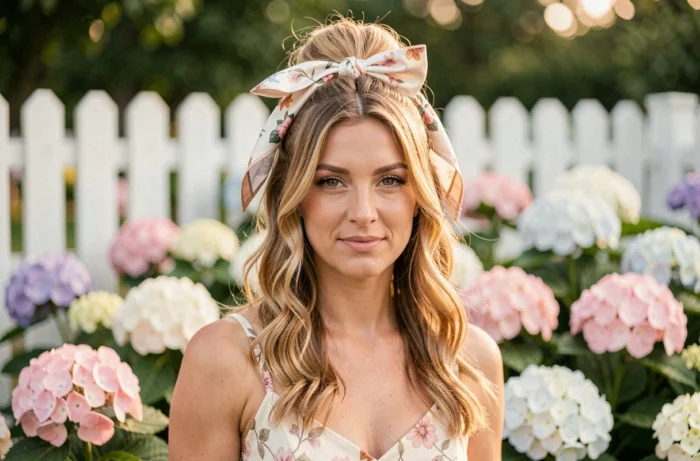
Gather the top half of your hair into a half ponytail. Use the scarf, folded into a strip, to tie this section, forming a neat, symmetrical bow at the back of your head.
The bow replaces a barrette and adds a pop of color that can be seen from behind. Choose a fabric with a little structure (cotton or linen) so the loops hold their shape.
10. The triangle bandana for short hair
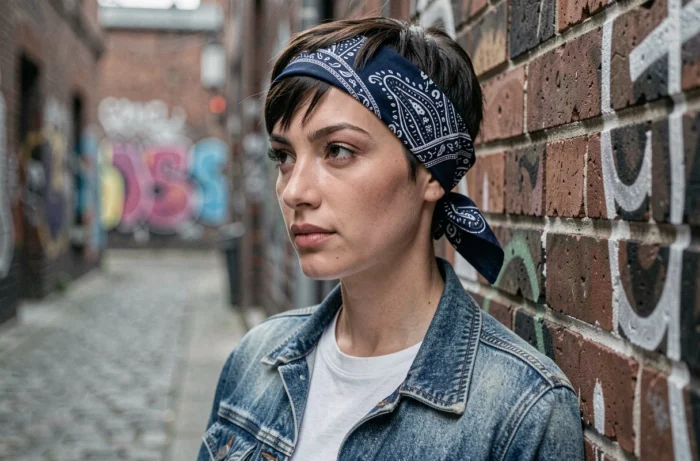
Fold the scarf into a triangle without folding it any further. Position the point of the triangle toward the nape of your neck, bring both ends forward, and tie them at the forehead or to one side.
With a bob or pixie cut, the triangle bandana creates a retro look inspired by the 1950s. The trick: let a few strands frame your face to avoid a look that feels too slicked back.
11. The braided crown with a scarf
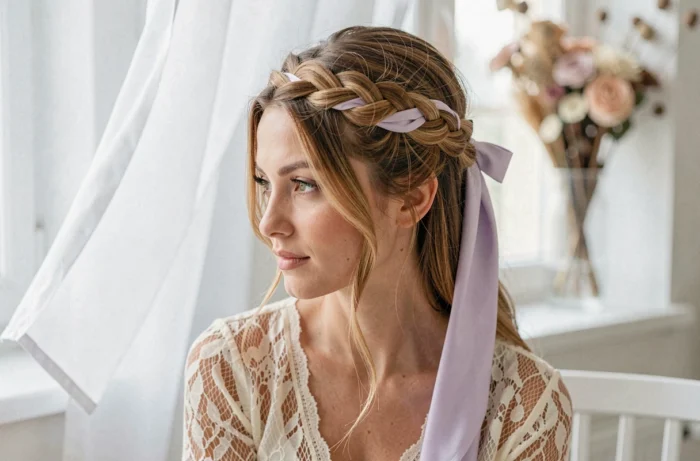
Create two side braids, incorporating the scarf into each one. Bring them over the top of your head to form a crown, then secure the ends with pins underneath the opposite braid.
A braided crown is a special-occasion hairstyle that takes on extra character with a floral scarf. Your hair needs to be at least medium length to wrap all the way around your head.
12. The rosette-style high bun
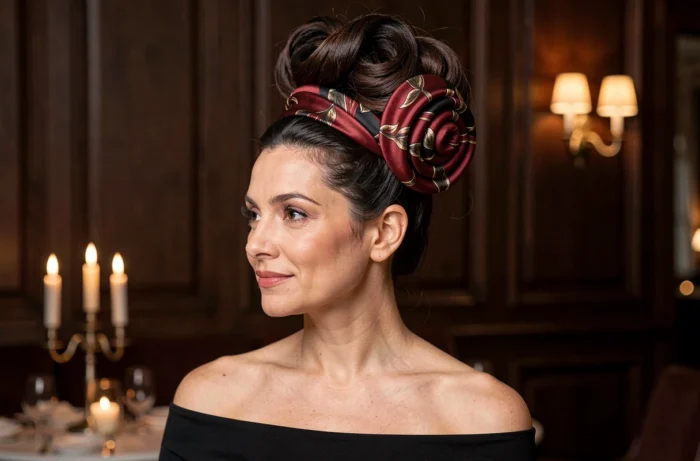
Twist your hair into a high bun and wrap the scarf, folded into a strip, around its base. Tie a small knot at the front of the bun to create a rosette effect.
This style keeps your neck clear and shows off your earrings. For a polished finish, secure the bun firmly with a covered hair tie before adding the scarf as a finishing touch.
13. The scarf headwrap for textured hair
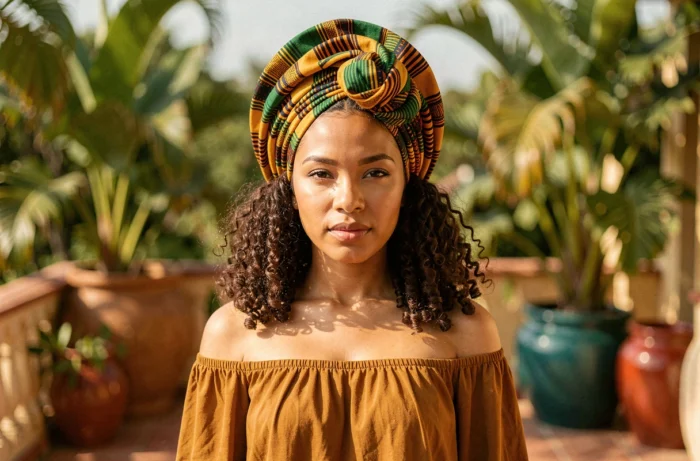
Fold a large scarf into a rectangle, place it at the nape of your neck, bring the ends up to your forehead, and cross them. Tie them at the back or tuck them under the fabric.
A headwrap protects textured hair from friction and helps preserve a twist-out or wash-and-go style. Choose a genuine silk satin-weave fabric rather than polyester to reduce friction, although the anti-breakage benefits are still debated in scientific literature.
14. The low ponytail with a side knot
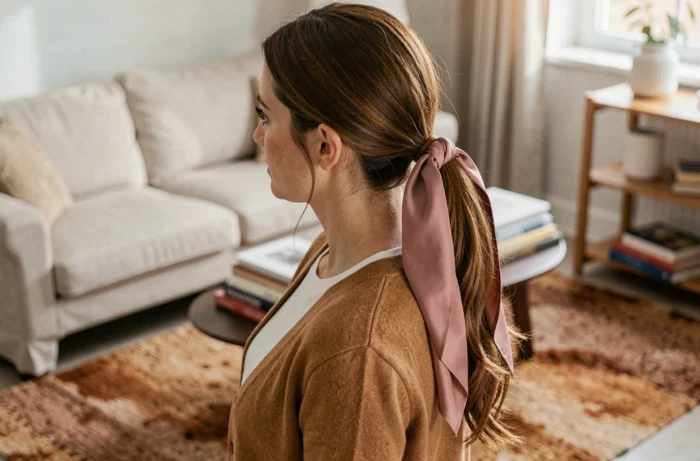
Tie a low ponytail slightly off-center. Knot the scarf to one side of the hair tie, letting one end hang longer than the other.
The asymmetry creates a relaxed look, perfect for the weekend. A striped or geometric-print scarf works especially well.
15. The two-strand twist with a scarf
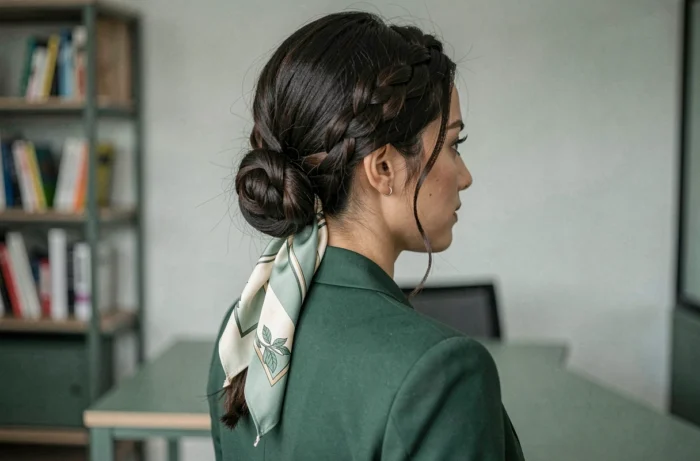
Divide a section of hair into two strands. Add the scarf, folded into a narrow strip, to one strand, then twist the two strands around each other. The scarf spirals around the twist.
This technique works as a single twist at the side of your face or repeated all over your head. It highlights the scarf’s color along the full length of the twist.
16. The French twist with a draped scarf
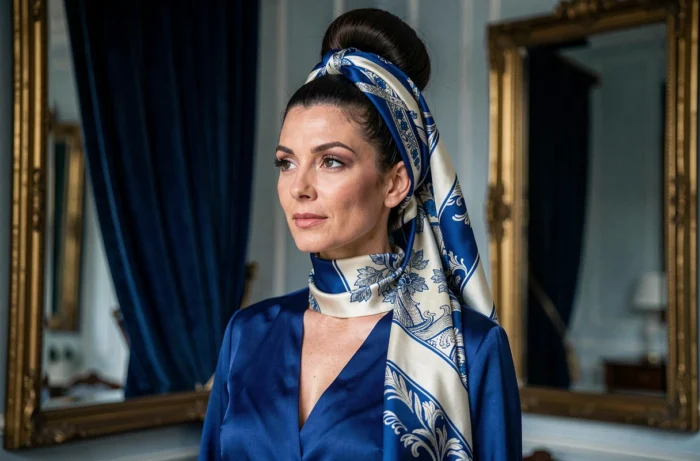
Create a classic French twist and secure it with pins. Drape the scarf diagonally around the twist, working from top to bottom, and tuck the end under the roll.
The French twist can accommodate even the widest scarves without making the style look bulky. Choose a generously sized silk square for a more visible drape.
17. The pin-up-style front knot
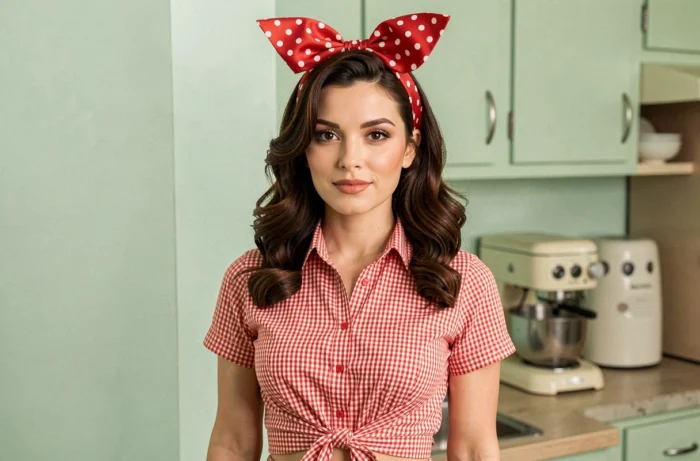
Fold the scarf into a wide headband. Place it under your hair at the nape of your neck, bring the ends up to your forehead, and tie a double knot. Let the ends of the knot point upward.
This retro look is reminiscent of the 1940s. It pairs well with vintage curls rolled inward. On straight hair, a blowout with a round brush beforehand adds the volume you need.
18. The scarf loop around a messy bun
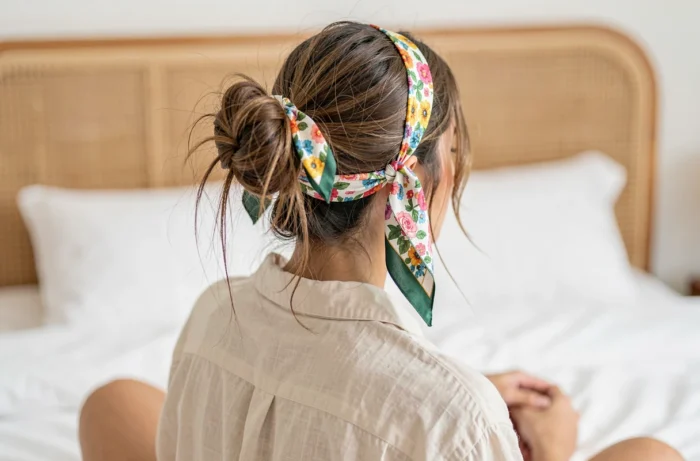
Quickly create a messy bun on the crown of your head. Wrap the scarf, folded into a strip, around the base of the bun, make a single loop, and let the ends hang down.
This look takes less than a minute. A single loop keeps it from looking too fussy. It’s the perfect go-to hairstyle when you’re short on time.
19. The double-wrap headband
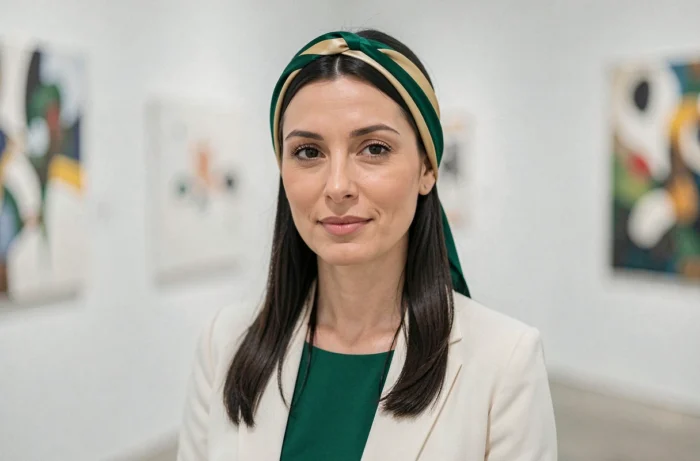
Fold the scarf into a strip about three centimeters wide. Wrap it all the way around your head once, then make a second, slightly offset pass to create a wider headband. Tie it at the nape of your neck under your hair.
The double wrap creates a structured accessory similar to a wide headband. It keeps strands away from your face without clips. Avoid tying it too tightly to prevent tension at your temples.
20. The fishtail braid with scarf ribbons
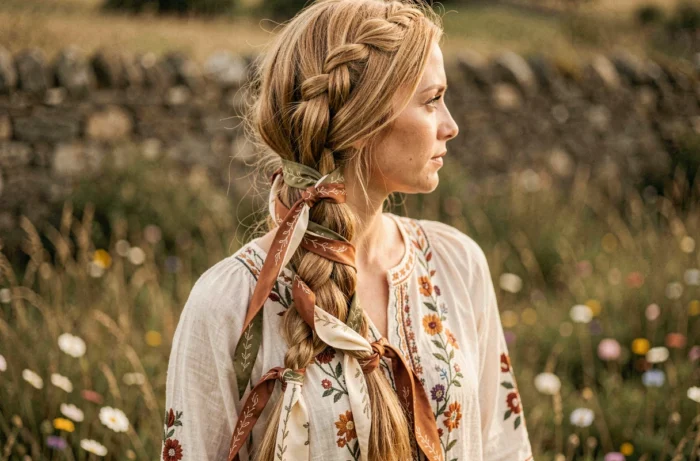
Cut (or fold very narrowly) the scarf to create two thin strips. Incorporate one strip into each half of the fishtail braid from the start. As you cross the strands, the fabric ribbons form a chevron pattern.
This hairstyle takes a little patience, but its graphic finish sets it apart from classic braids. It stays in place all day without needing a touch-up.
A scarf costs little, takes up no space in your bag, and transforms any hairstyle. Here are the key things to consider when choosing one:
- Fabric composition: check the label, because a scarf labeled “satin” may be made of polyester rather than silk.
- Square size: a 50-centimeter scarf is enough for a headband, but a turban or headwrap needs to be at least 90 centimeters across.
- Tension on your hair: if your hairstyle pulls, hurts, or leaves a red mark, loosen it before it damages your hairline.
The right scarf is the one you actually wear, not the one left folded in a drawer.